 Have we given up on changing consumer behavior around package material recycling? Or, are there tools that we can use to ‘move the needle forward.’ Earth911 thinks change is possible.
Read more at Packaging World

Have we given up on changing consumer behavior around package material recycling? Or, are there tools that we can use to ‘move the needle forward.’ Earth911 thinks change is possible.
Read more at Packaging World
 ”The primary role of packaging is protection, whether that be primary packaging to reduce oxidation, moisture change or insect/microbial access or transportation packaging to reduce crushing or other damage in distribution. It is more than coincidental that packaging usage per person is higher in the developed world and food availability is much greater. The benefits of (diverse) packaging are obvious to us but less so in many developing countries. Both use and quality of packaging is important to reduce food loss and impact sales.”
Read more on packaging design and food loss at Packaging Digest.
 A niche topic, a clear defined target group, a sharp program content, up to 80 stand units, a low entry fee et voilá, the ingredients that’ll make ‘Foodpacking Event 2013’ into a special event. The exhibition will take place on October 9 and 10 (Wednesday and Thursday) and will be held in ‘High Five’ in the ‘Jaarbeurscomplex’ in Utrecht, The Netherlands.
This event has been given the subtitle: High knowledge event on packaging in the food industry.
Read more here (Dutch).
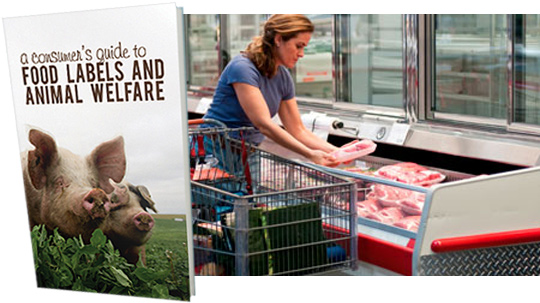 Many food labels are confusing (and some downright misleading) especially with regard to animal welfare claims. To help navigate the confusion, the Animal Welfare Institute (AWI) has released A Consumer’s Guide to Food Labels and Animal Welfare.
This new guide aims to help consumers who purchase meat, dairy and eggs interpret the meaning of label claims and locate products from animals who were humanely raised and handled.
More on ‘A Consumer’s Guide to Food Labels and Animal Welfare’ here.
 On January 1st, 2013, taxes on packaging in The Netherlands will possibly be abolished. Owing to an agreement between Dutch State Secretary Joop Atsma (Infrastructure and Environment) and the business world, manufacturers, importers and sellers of packaged products will be responsible for the costs of collection and recycling of plastic packaging over the next ten years.
Read the complete article (in Dutch).
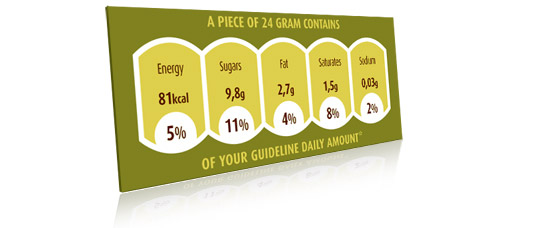 Food companies have five years to implement the mandatory nutrition labelling rules of the European Union’s Food Information to Consumers Regulation published today, said international policy experts EAS (Strategic advice on nutritional products).
Xavier Lavigne, Food Law Manager at EAS, said that the clock starts ticking towards the five-year deadline for nutrition labelling requirements from 20 days after publication, therefore from 13 December 2011.
”The regulation introduces a minimum font size of 1.2mm for all mandatory label information, and 0.9mm for products whose packaging has a largest surface of less than 80cm2.”
More information on the EAS website.
 The British Standards Institution, BSI, has launched a new standard to streamline food safety systems between food manufacturers and the packaging they use for their products.
PAS 223—Prerequisite programmes and design requirements for food safety in the manufacture and provision of food packaging—provides a common international methodology for developing a prerequisite program for food and drink packaging safety. PAS 223 aims to bring consistency across global packaging industry practices. It could also potentially reduce tendering costs for packaging manufacturers who adhere to it and as help align packaging activities more closely with their clients’ requirements.
Read more


