Many food labels are confusing (and some downright misleading) especially with regard to animal welfare claims. To help navigate the confusion, the Animal Welfare Institute (AWI) has released A Consumer’s Guide to Food Labels and Animal Welfare.
This new guide aims to help consumers who purchase meat, dairy and eggs interpret the meaning of label claims and locate products from animals who were humanely raised and handled.
More on ‘A Consumer’s Guide to Food Labels and Animal Welfare’ here.
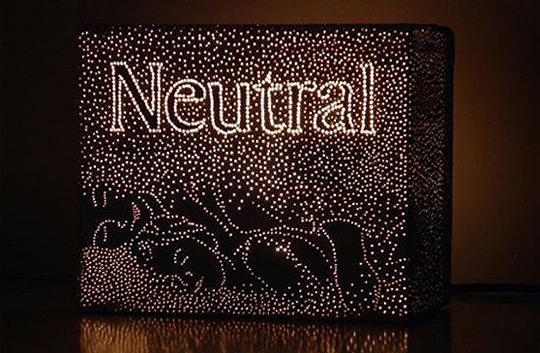
Already back in 2007, Anke Weiss, a Dutch modern designer who uses recycled materials, has designed a series of beautiful lights made from recycled food and drink packaging. Weiss takes – for instance – juice cartons that have been emptied of their contents and pokes holes in them, through which light will shine after the piece is completed. Recycling to the max that is.
More on this project and Anke Weiss’ work here, here and here.
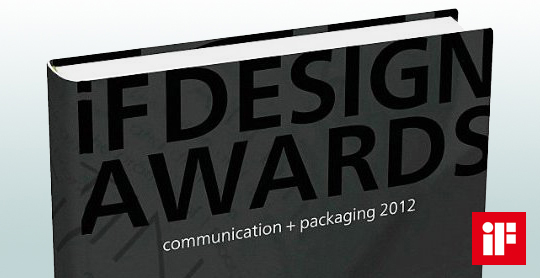
A compilation of yearly design awards, this book features the best in communication and packaging design from around the world. The iF communication design awards have been conferred since 2004 by a panel of design experts from across the world. Showcased in this volume are the most outstanding examples of communication and packaging design. This yearbook presents trendsetting achievement in advertising, media, campaigns, packaging, and websites.
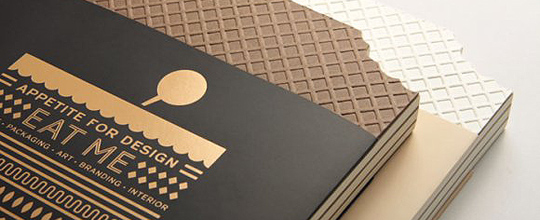
Eating a pure experience of smell and taste? No longer. Nowadays it’s rather an effective agency to communicate and engage, an indication of cultural values, lifestyle, ispirations and imagination.
This showcase is complemented by fascinating insights in their forewords and case studies given by experts, entrepreneurs and practitioners, each distinct with regards to their experience in product, packaging, image-making, branding and interior design.
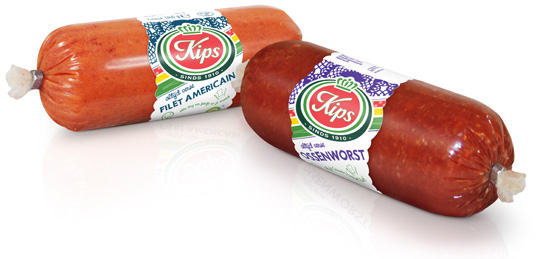
For the Dutch company Kips (part of Zwanenberg Food Group), we designed a series of contemporary labels/banderols with optimum product visibility that convey top quality. Each label comes in a different colour setting for each different taste variety.
In a world of tremendous fast growing digitalization, packaging design can’t stay far behind. Want to ‘feel’ a package and see it’s benefits without having the actual package in hands? Apps and other digital media provides us, in combination with regular printed media, an innovative and even better way of advertising.
Stepfive Communication & Design designed and developed a mobile and desktop website for Dutch candy producer Look-O-Look, to be reached by a QR-code at advertisements. Consumers and sales managers can digitally feel and navigate around the new package design at this site. In combination with printed and social media it gives Look-O-Look a wide spread and an effective campaign to show their brand and products.
Stepfive creates new distinctive retail and catering concepts for food and beverage brands on a daily basis. We develop new concepts, recipes, brands and packaging design together with our clients. We also revitalise existing products on our own initiative, because we are convinced many products could have a more successful brand appearance with the right adaption and repositioning. For example, we have created this new concept for Bloody Mary.
This Bloody Mary concept can be used for the catering and retail sector. The bottle has two facings (meant for standing and hanging) and can therefore be placed on a shelf, perhaps in a retail environment, or can be suspended within catering establishments. You also have the option of attaching a connecting piece with a hose, allowing drinking glasses to be filled with Bloody Mary from a bottle hanging on the bar.
The packaging design for the international figure Bob the BuilderTM luncheon meat and liver paté was created by Stepfive for Zwanenberg Food Group. This delicious sandwich filling for children appeals not only to the youngest ones. Due to it’s strong presence, it also looks very desireable on the shelf. Bob the BuilderTM makes lunch and breakfast even more fun!
Packing design evolves. An edible bottle made from organic materials that is biodegradable too? No problem. Dr. David Edwards (professor at Harvard) is working on the WikiCells project that looks into creating edible packaging. WikiCell membranes can hold the drink together and can also be consumed afterwards. These membranes could be made out of something tasty, like chocolate or candy.
There are some hurdles to be taken though. Hygiene for instance. Products in ready-made packaging go through many hands – literally – before they reach the end consumer, and despite the companies’ assurances of their products’ safety, it is unlikely that consumers would be willing to nibble on something whose hygiene can so clearly be compromised. Still, marketing and recycling experts agree that there is room for experimentation.
Wish to try some of Edwards’ experimental edible packaging? You can sample them at the stunningly beautiful Lab Store Paris.
A recent study by Accenture, ComScore and Dunnhumby USA shows the importance of an attractive webshop in relation to actual purchases in-store. Shoppers who visit websites for consumer packaged goods brands before setting foot in a store spend up to 37% more on those brands in-store than those who didn’t come to these websites. Web visitors also returned to the store more often to buy the brand: 3.2 buying occasions per month against 2.3 for non-visitors. Site visitors also spent more per month in the product category of a brand whose site they’ve gone to.
Read the complete study here.
More on (online) shopping and packaging design here.

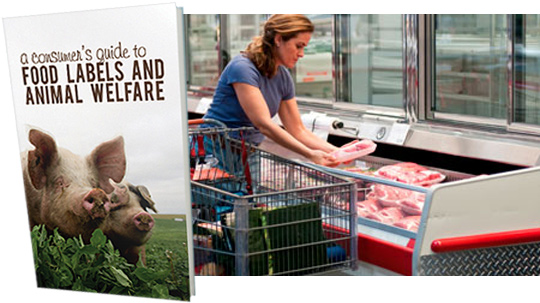 Many food labels are confusing (and some downright misleading) especially with regard to animal welfare claims. To help navigate the confusion, the Animal Welfare Institute (AWI) has released A Consumer’s Guide to Food Labels and Animal Welfare.